
How AI Systems Are Transforming Print Design and Manufacturing
The print industry has experimented with AI tools for years. The real transformation comes from AI systems that operate across the entire workflow—connecting design decisions to production outcomes.

Key Takeaways
- 1AI tools deployed in isolation rarely deliver lasting value. AI systems—integrated across design, production, and operations—transform how print businesses operate.
- 2The print industry's biggest inefficiencies aren't in any single step, but in the gaps between steps. AI systems close these gaps.
- 3Success with AI in print manufacturing requires operational integration, not just model deployment. The companies that treat AI as infrastructure win; those that treat it as a feature experiment.
The print design and manufacturing industry occupies a peculiar position in the broader technology landscape. It sits at the intersection of creative design, precision engineering, and operational scale—three domains that each have their own relationship with artificial intelligence. Most print businesses have experimented with automation and digital tools over the past decade, adopting workflow software, digital presses, and various point solutions that promise efficiency gains. Yet walk into the average print operation today and you'll find something curious: despite all these tools, much of the actual work still depends on manual validation, visual inspection, and human judgment at critical junctures.
This isn't because print operators are technologically conservative or resistant to change. It's because the problems in print manufacturing are fundamentally systems problems, and most technology deployments address only pieces of those systems. A design validation tool that catches resolution issues doesn't help if the production planning system can't account for the rework it prevents. A quality inspection camera that identifies defects doesn't deliver value if operators can't act on its alerts fast enough to prevent waste. The technology works; the system doesn't.
This is where AI systems—as distinct from AI tools—become genuinely transformative. The distinction matters more than most vendors want to admit, and understanding it is the difference between AI that delivers measurable ROI and AI that becomes another expensive experiment.
The Core Problem: Fragmented Workflows
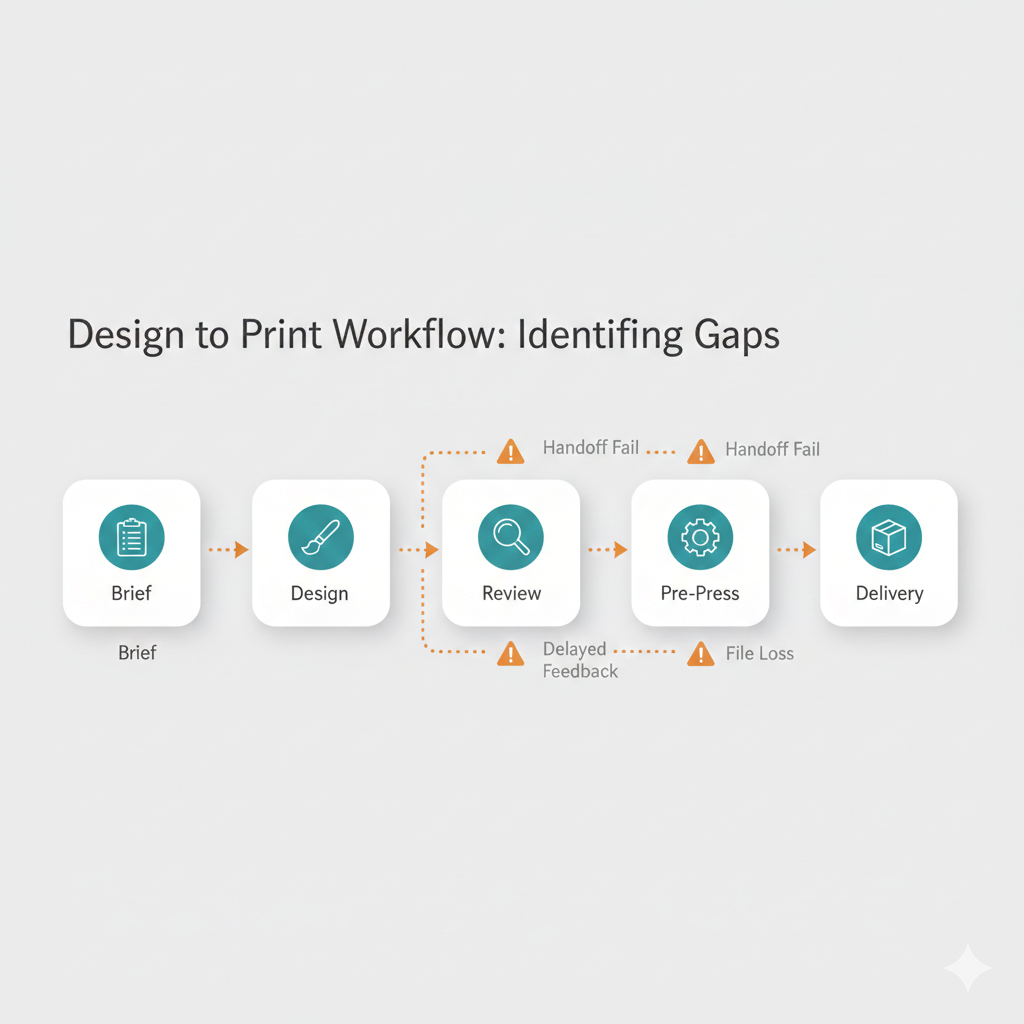
Step into any print manufacturing operation and observe the workflow from design intake to finished product. You'll notice something immediately: the process is a series of handoffs, each creating opportunities for error, delay, and waste. A design file arrives from a client. Someone validates it against print specifications—checking resolution, bleed areas, color spaces, file formats. If issues exist, they're communicated back to the client, initiating a back-and-forth that can consume days. Once approved, the file moves to prepress, where it's prepared for specific printing equipment. Then to production scheduling, where it competes for machine time with other jobs. Then to the press floor, where operators monitor output for quality. Then to finishing, cutting, binding. Each step involves different people, different systems, and different criteria for success.
The inefficiencies in this workflow aren't primarily within any single step—they're in the gaps between steps. Information that operators need doesn't flow from upstream processes. Decisions made in design don't account for downstream production constraints. Quality issues discovered late require rework that could have been prevented with earlier intervention. The problem isn't that any individual function is poorly executed; it's that the functions aren't connected into a coherent system.
Point solutions—AI-powered or otherwise—address pieces of this puzzle. Design validation software catches file issues. Quality inspection systems identify defects. Demand forecasting tools predict order volumes. Each delivers value in isolation. But because they operate independently, they can't address the systemic inefficiencies that account for most of the waste, delay, and cost in print operations. The design validation system doesn't know what the quality inspection system is seeing. The forecasting tool doesn't account for actual production constraints. Local optimization occurs, but end-to-end efficiency remains elusive.
What Makes an AI System Different
An AI system is not a single model or tool. It is an integrated architecture that combines data pipelines, machine learning models, operational logic, and human-in-the-loop workflows into a coherent whole. The individual components matter less than how they connect. A predictive model is only as valuable as the actions it enables; a data pipeline is only as valuable as the decisions it informs.
In print manufacturing, an AI system connects design, production, quality, and operations into a continuous feedback loop. Information flows not just forward through the workflow but backward—quality issues inform design validation rules; production bottlenecks shape scheduling priorities; actual demand patterns refine forecasting models. The system learns and adapts, not because any single model is particularly sophisticated, but because the models are connected to operational reality.
“Most failures in industrial AI happen when tools are deployed without operational integration. The model works; the system doesn't. And in manufacturing, only systems deliver ROI.
This distinction matters because most AI failures in manufacturing stem from the same root cause: deploying models without building the systems that make those models useful. A computer vision model that detects print defects with 99% accuracy sounds impressive—until you discover that by the time it flags an issue, the batch is already complete and the waste is already incurred. A demand forecasting model that predicts order volumes within 5% sounds valuable—until you realize the production planning team doesn't trust it because it doesn't account for the machine constraints they deal with daily. Technical performance and operational value are not the same thing.
AI in Print Design and Pre-Press
The design and pre-press stages are where print jobs succeed or fail, though the consequences often don't manifest until later. A file that passes initial review but contains subtle issues—an image slightly below optimal resolution, a color combination that will print inconsistently, a layout that will cause finishing problems—creates costs that accumulate downstream. The traditional approach to this problem is experienced human reviewers applying learned heuristics. The problem with human review isn't capability but scalability: as job volumes increase and turnaround expectations compress, thorough manual validation becomes a bottleneck.
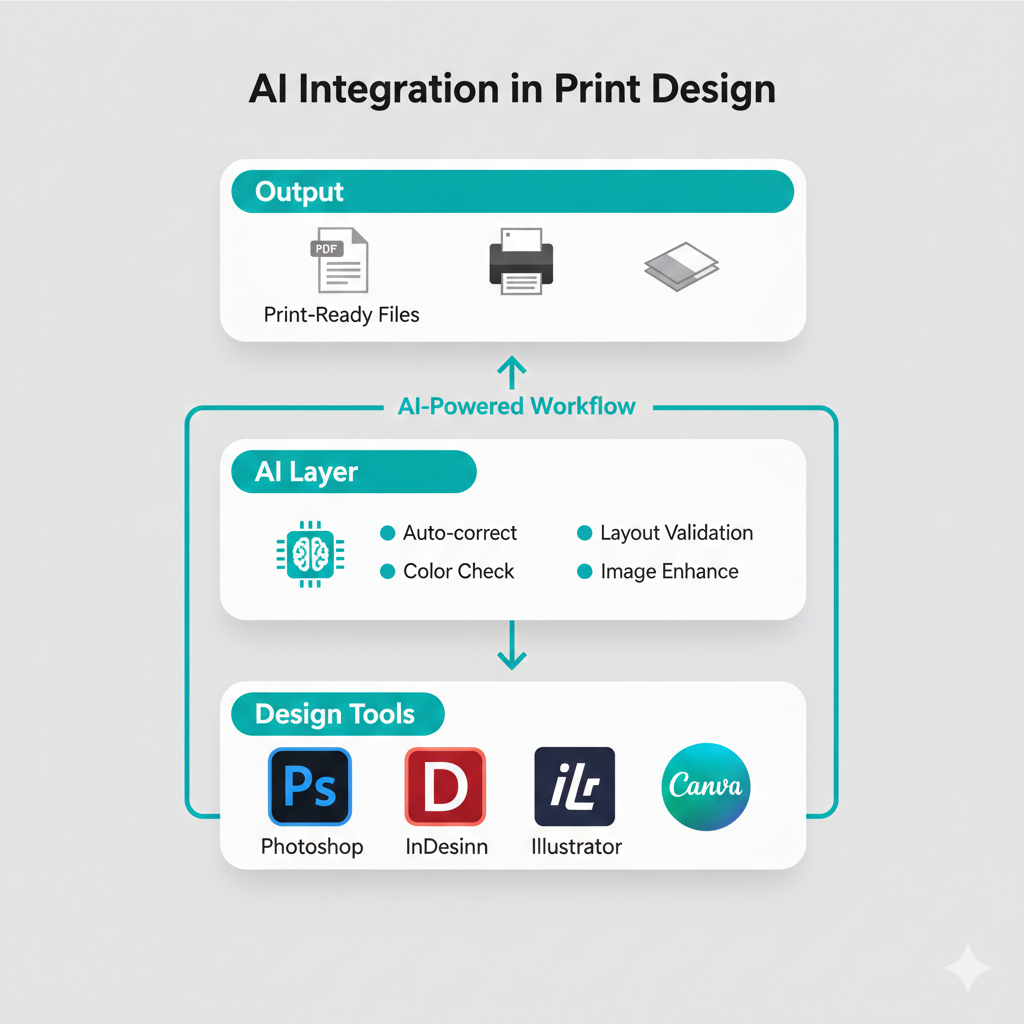
AI systems in pre-press don't replace human judgment; they extend it. They act as continuous, tireless reviewers that flag potential issues before human experts need to engage. Resolution analysis that identifies images likely to print poorly. Layout validation that catches bleed violations and alignment issues before proofing. Color space analysis that predicts combinations likely to produce inconsistent results across batches and machines. File structure checks that identify elements likely to cause RIP errors or printing artifacts.
The value isn't just in catching issues—it's in catching them early, when correction costs pennies instead of dollars. An issue identified during initial file intake might require a quick client communication. The same issue discovered after plates are made requires rework that costs materials, machine time, and schedule disruption. The same issue discovered in finishing might scrap an entire run. AI systems in pre-press are fundamentally about compressing the feedback loop between problem and detection.
The earlier an issue is caught in print production, the cheaper it is to fix. AI systems in pre-press don't just improve quality—they fundamentally shift the economics of error correction.
What makes this an AI system rather than a collection of AI tools is the integration. The pre-press validation system learns from downstream quality data: when a file passes pre-press validation but produces quality issues in production, that feedback tightens future validation rules. When certain file characteristics consistently cause problems on specific machines, that knowledge shapes both validation logic and production routing. The system improves continuously because it's connected to operational outcomes, not just initial predictions.
AI in Production and Quality Control
Production quality control in print manufacturing has traditionally relied on sampling and spot-checking. An operator periodically pulls sheets from a run, inspects them against specifications, and adjusts machine settings if issues appear. This approach worked when runs were longer and quality expectations were more forgiving. In today's environment—shorter runs, tighter tolerances, faster turnaround—sampling-based quality control creates unacceptable exposure. By the time a sampled sheet reveals a problem, hundreds or thousands of defective units may already be produced.
Computer vision-based quality inspection changes this equation fundamentally. Cameras and sensors inspect every sheet, every impression, in real time. AI models trained on defect patterns—smudging, misregistration, color drift, foreign materials, streaking—identify issues as they occur, not minutes or hours later. The system can alert operators immediately, stop production automatically when certain thresholds are exceeded, and generate detailed quality records that support continuous improvement efforts.
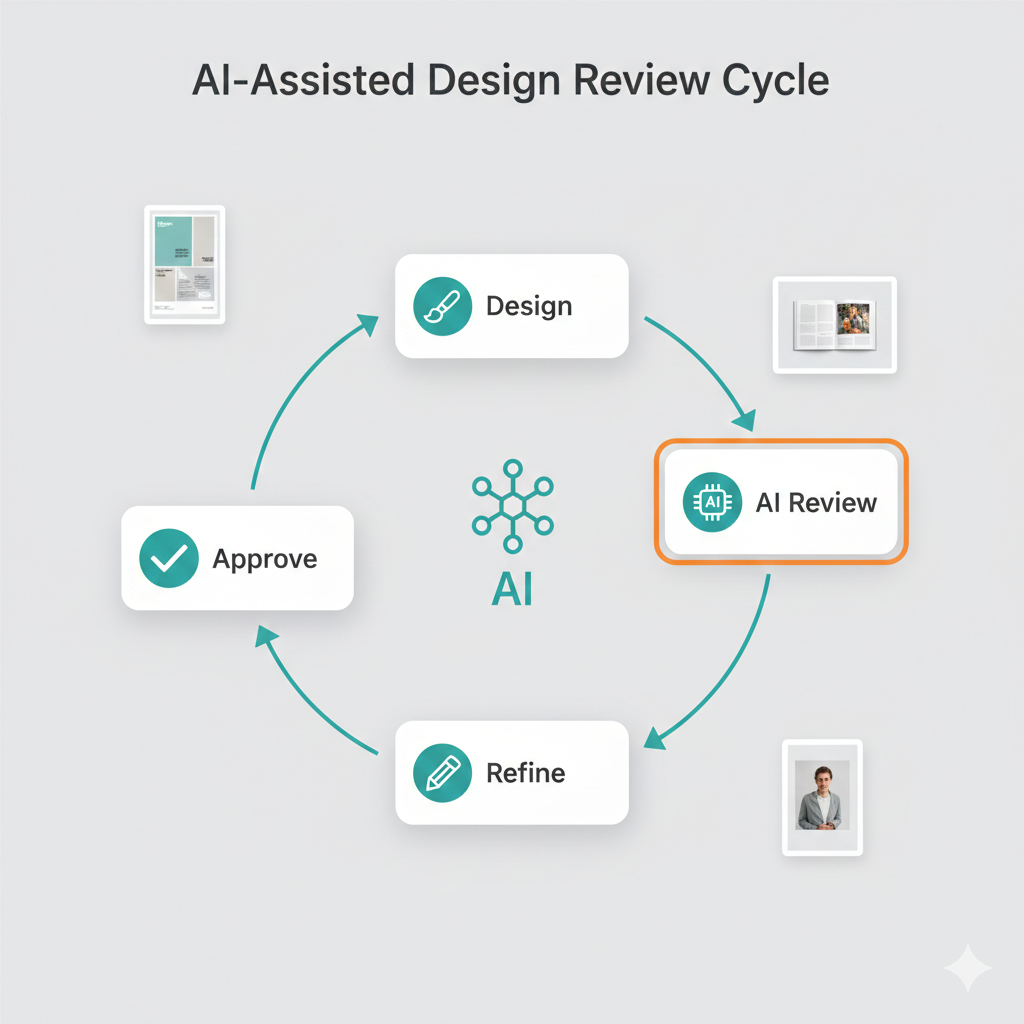
But inspection alone isn't enough. What transforms quality inspection from a tool into a system is integration with production control and upstream processes. When the vision system detects an emerging pattern—say, gradually increasing color density on certain areas of the sheet—that information can trigger automatic machine adjustments before the deviation exceeds acceptable limits. When specific defect types correlate with particular file characteristics, that knowledge flows back to pre-press validation. When quality issues cluster around certain times, shifts, or environmental conditions, that pattern informs operational decisions.
The AI system doesn't just detect defects; it learns from them. Over time, models become more accurate at predicting which jobs, materials, and conditions will produce quality issues. This predictive capability enables proactive intervention—adjusting machine settings, routing jobs to better-suited equipment, scheduling preventive maintenance—rather than reactive response to problems already occurring.
AI in Manufacturing Operations
Operational efficiency is where AI systems deliver their highest ROI in print manufacturing, though it's also where implementation complexity is greatest. Production planning in most print operations relies on rules, experience, and static forecasts. Schedulers assign jobs to machines based on capability, availability, and deadline requirements. Inventory levels are set using historical consumption patterns and safety stock calculations. Maintenance is scheduled at fixed intervals or triggered by obvious failures. Each of these approaches represents reasonable decision-making given limited information; each also leaves substantial efficiency on the table.
AI systems improve operational decisions by incorporating information that human planners can't practically consider. Demand forecasting models that account for seasonality, customer-specific patterns, market trends, and leading indicators produce more accurate predictions than extrapolations from historical averages. Production scheduling that considers not just machine capability and availability but also changeover times, operator proficiency, quality patterns, and energy costs finds schedules that human planners wouldn't identify. Inventory optimization that accounts for supplier lead times, demand variability, storage costs, and obsolescence risk maintains service levels with less capital tied up in materials.
Predictive maintenance deserves particular attention because it exemplifies the systems thinking required for AI success. Traditional maintenance approaches are either reactive (fix things when they break) or preventive (service equipment at fixed intervals regardless of condition). Both are suboptimal: reactive maintenance causes unplanned downtime and may allow small problems to become large ones; preventive maintenance services equipment that doesn't need it while missing deterioration that occurs between scheduled intervals.
Predictive maintenance uses sensor data, production metrics, and historical failure patterns to forecast when equipment will need service. A press showing subtle changes in registration consistency, ink consumption, or operating temperature might be flagged for inspection before those changes manifest as quality issues or breakdowns. The AI system learns from each maintenance event: when predicted maintenance was necessary, when it wasn't, and what patterns preceded actual failures. This continuous learning improves prediction accuracy over time.
The Common Mistake: Isolated AI Tools
The pattern of AI disappointment in manufacturing is depressingly consistent. A company identifies a problem—quality defects, planning inefficiency, production bottlenecks. They deploy an AI tool that addresses that specific problem. The tool works: it detects defects, predicts demand, optimizes schedules. Initial results look promising. Then, gradually, usage declines. Operators revert to manual processes. The tool becomes shelfware. Leadership concludes that AI doesn't work for their operations.
What went wrong isn't the AI—it's the implementation. The tool was deployed without the operational integration that makes it useful. Quality alerts went to dashboards that nobody monitored. Demand forecasts weren't connected to production planning systems. Optimized schedules conflicted with constraints the system didn't know about. The AI worked; the system didn't.
“AI tools are easy to deploy and easy to abandon. AI systems are harder to deploy and harder to abandon—because they become part of how the operation runs, not a separate capability sitting alongside it.
The solution isn't better AI; it's better systems thinking. Before deploying any AI capability, successful implementations answer several questions: What decision will this AI inform? Who makes that decision today? How will the AI's output reach them? What will they do differently based on that output? How will we know if the AI is actually improving outcomes? These questions force attention to the operational context that determines whether AI delivers value.
The AI Systems Approach
Building AI systems for print manufacturing requires a different approach than deploying AI tools. The focus shifts from models to workflows, from accuracy metrics to business outcomes, from one-time deployment to continuous operation.
The first principle is designing workflows first, models second. Before building or buying any AI capability, map the end-to-end workflow it will affect. Identify the decisions that capability should improve. Understand how information currently flows (or doesn't flow) between stages. Design the integration—how AI outputs will reach decision-makers, how feedback will return to improve models—before selecting or building the AI itself. This workflow-first approach prevents the common failure mode of technically excellent AI that doesn't connect to operational reality.
The second principle is integrating AI into existing tools and machines rather than creating parallel systems. Operators already have workflows, tools, and interfaces they're comfortable with. AI systems that require operators to use separate applications, check different dashboards, or learn new interfaces create friction that undermines adoption. Successful AI systems embed intelligence into existing workflows: alerts appear in systems operators already monitor; recommendations integrate with tools they already use; feedback is captured through actions they already take.
The third principle is operating and improving systems continuously. AI models degrade over time as conditions change: equipment ages, materials vary, customer expectations evolve, market conditions shift. A model trained on last year's data will perform worse on this year's reality. AI systems require ongoing attention—monitoring performance, retraining models, adjusting thresholds, incorporating new data sources. This isn't maintenance; it's continuous improvement that compounds over time.
The fourth principle is aligning AI outcomes with business metrics. Technical metrics like model accuracy, false positive rates, and prediction confidence matter for debugging but not for business decisions. What matters is whether AI systems are improving the metrics that matter to the business: waste rates, throughput, quality consistency, customer satisfaction, cost per unit. If technical performance is good but business metrics aren't improving, something is broken in the system—probably in the connection between AI output and operational action.
Implementation Realities
Deploying AI systems in print manufacturing encounters predictable challenges that careful planning can address. Legacy equipment is the most common concern: older presses, finishing equipment, and handling systems weren't designed for digital integration. The reality is more accommodating than it appears. AI systems typically layer on top of existing equipment using sensors, cameras, and data connectors rather than requiring equipment replacement. A 20-year-old press can produce data for AI systems through add-on sensors measuring temperature, vibration, and cycle counts; cameras monitoring output quality; and integration with existing control systems through standard industrial protocols.
Data quality is the second common challenge. AI systems require data to learn, and print operations often have data scattered across disconnected systems, stored in incompatible formats, or simply not captured at all. The pragmatic approach is starting with available data—even imperfect data—and improving data capture as the system demonstrates value. Waiting for perfect data before starting delays benefits indefinitely; starting with available data while planning improved capture gets the learning process underway.
You don't need to replace equipment to implement AI systems. Sensors, cameras, and data connectors let AI work with existing machines—often better than operators expect.
Organizational change is the third challenge, and often the most significant. AI systems change how decisions are made, which affects roles, responsibilities, and sometimes job security concerns. Successful implementations involve operators and managers early, position AI as augmenting human capability rather than replacing it, and demonstrate value through pilot programs before full deployment. The goal is making AI an ally to the people who will use it, not a threat that triggers resistance.
Timeline expectations need calibration. AI systems that deliver significant value typically show measurable improvements within 3-6 months, but reaching full potential takes longer—often 12-18 months as models learn from accumulated data and the organization adapts processes to leverage AI capabilities. Companies expecting immediate transformation are disappointed; companies expecting gradual, compounding improvement are usually satisfied.
The Business Case
The ROI from AI systems in print manufacturing comes from several sources, with relative importance varying by operation. Waste reduction is typically the largest contributor: catching defects earlier, preventing problems through predictive intervention, and optimizing processes to reduce errors can cut waste rates by 20-30%. For operations with significant material costs, this alone often justifies AI investment.
Throughput improvement contributes through better scheduling, reduced downtime, and faster problem resolution. Operations typically see 15-25% improvement in effective throughput—not through faster machines but through fewer interruptions, better utilization, and smoother workflow. This matters especially for operations running near capacity, where incremental throughput has high marginal value.
Working capital reduction comes through inventory optimization and faster cycle times. AI systems that accurately forecast demand and production requirements allow operations to maintain service levels with less inventory, freeing capital for other uses. The typical reduction is 10-20% of inventory value.
Labor efficiency improves not through workforce reduction but through higher-value work. When AI systems handle routine monitoring, validation, and decision support, skilled workers can focus on complex problems, customer relationships, and continuous improvement. This reallocation often improves both productivity and job satisfaction.
FAQs
Yes. AI systems typically layer on top of existing equipment using sensors, cameras, and data connectors. A press from the 1990s can feed data to modern AI systems through retrofit sensors and integration adapters. Full equipment replacement is rarely necessary.
No. Mid-sized operations often see the highest percentage improvement because they have enough volume to benefit from optimization but haven't yet invested in sophisticated planning and quality systems. The economics work for operations as small as $5-10M in annual revenue.
Measurable improvements typically appear within 3-6 months. Full potential—as models learn from accumulated data and organizations adapt—usually takes 12-18 months. Expect gradual, compounding improvement rather than immediate transformation.
AI tools solve specific problems in isolation—detecting defects, predicting demand, optimizing schedules. AI systems connect these capabilities into integrated workflows where information flows between functions, models learn from operational outcomes, and decisions at each stage account for impacts elsewhere.
Not necessarily. Partnering with AI systems providers who understand both the technology and print manufacturing operations is often more practical than building internal capability. What you do need is operational leadership committed to integration and continuous improvement.
Build Your Team, Not Just a Contract
With InfAI's offshore dedicated teams, you get professionals who join your workflow for the long run. Grow steadily, stay flexible, and work with people who care about your success as much as you do.